News
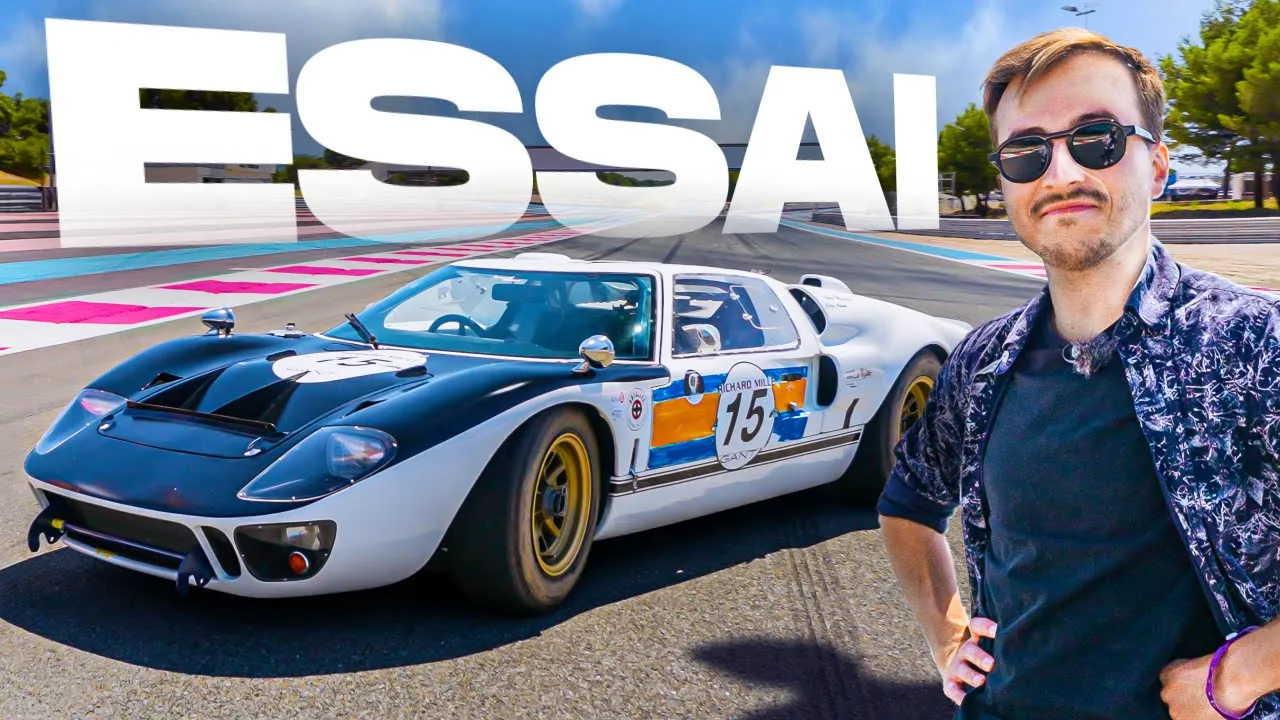
Ford GT40: Sylvain Lyve at Circuit Paul Ricard
Explore the Ford GT40’s history, Le Mans victories and a drive at Circuit Paul Ricard in Sylvain Lyve’s video.
6 min read

The Ford GT40 holds a special place in motorsport history. Its low silhouette, V8 engine and record at the 24 Hours of Le Mans have made it an endurance racing icon. In “Ford GT40: The Rolling Legend”, Sylvain Lyve introduces the car, explores its history and takes the wheel at Circuit Paul Ricard. It is an opportunity to connect a remarkable racing story with the experience of seeing the car in action.
Ford GT40: a racing car that became a benchmark
Before heading out on track, Sylvain introduces the car and looks back at its history. This gives the drive some context: the GT40 is more than an instantly recognisable design. It belongs to an era when manufacturers used endurance racing to demonstrate their engineering expertise. Its appeal lies as much in its layout and proportions as in the races that built its reputation. The introduction offers a chance to get to know the car before seeing it in its natural environment: a racing circuit.
Driving the Ford GT40 at Circuit Paul Ricard
The discovery continues behind the wheel at Circuit Paul Ricard. Sylvain moves from introducing the car to driving it, bringing the GT40 to life on track. The footage offers another perspective: viewers can follow the car through successive corners, listen to its engine and watch the driver at work. Rather than claiming a lap time or estimating horsepower from the footage, the aim here is to explore a driving experience that complements the historical account.
Watch Sylvain Lyve’s video
Watch the video above for the introduction, the look back at the GT40’s history and the drive at Paul Ricard. Press play to discover the car with Sylvain Lyve. The video is presented in French.
Why did the Ford GT40 make its mark at the 24 Hours of Le Mans?
The GT40’s story is inseparable from Ford’s ambition to compete at the highest level of endurance racing in the 1960s. Facing Ferrari, then a benchmark in the discipline, the American manufacturer launched an ambitious racing programme. The goal was not simply to build a car that was fast over a single lap: it had to last an entire twenty-four-hour race, with all the demands on reliability, fuel consumption and organisation that this involved.
In 1966, Ford won the 24 Hours of Le Mans with the GT40 Mk II and achieved a one-two-three finish. The victory marked a turning point in its rivalry with Ferrari. Ford won again in 1967 with the Mk IV, followed by further GT40 victories in 1968 and 1969. These different developments should be distinguished rather than treating every winning car as the same model. Nevertheless, this run of success explains why the GT40 name remains so closely associated with Le Mans.
What does the name GT40 mean?
The GT40 name refers to Grand Touring and a height of approximately forty inches, or just over one metre. That low height is central to the car’s visual identity. The driving position is close to the ground, the body is compact and its proportions immediately reflect its sporting purpose.
The rear-mid-engine layout is another important part of understanding the GT40. The engine sits behind the cockpit and ahead of the rear axle. This arrangement reflects the demands of a racing car, as do the efforts devoted to cooling and aerodynamics. Looking at these choices helps explain the thinking behind the design, beyond its appearance alone.
GT40 Mk I, Mk II and Mk IV: why distinguish the versions?
The GT40 name spans several stages of Ford’s programme. The Mk I is particularly associated with the 1968 and 1969 victories, while the seven-litre Mk II won the 1966 race. The Mk IV, victorious in 1967, has a distinct design and body. Confusing them means missing part of this technical and sporting history.
The same care is needed when looking at a GT40 today: a period car, a reconstruction and a replica do not necessarily share the same provenance or specifications. Engine displacement, power output and setup can vary.
Frequently asked questions about the Ford GT40
Are the Ford GT40 and Ford GT the same car?
No. The GT40 refers to the historic racing programme of the 1960s. The Ford GT name was later used for more recent cars that draw on part of that heritage, but they are not the same model. This distinction is useful when researching a car’s history, a driving review or technical specifications.
Where can I watch Sylvain Lyve’s GT40 drive?
The video “Ford GT40: The Rolling Legend” is embedded earlier in this article. Sylvain Lyve introduces the car, discusses its history and drives it at Circuit Paul Ricard. The YouTube player lets you watch without leaving the page. The original video is in French.
Video and thumbnail: Sylvain Lyve — “Ford GT40 : La légende roulante” (“Ford GT40: The Rolling Legend”), YouTube.
More from the journal
More stories will be added soon.
